Heidegger and Future Presencing (The Black Pages) by Spencer Golub
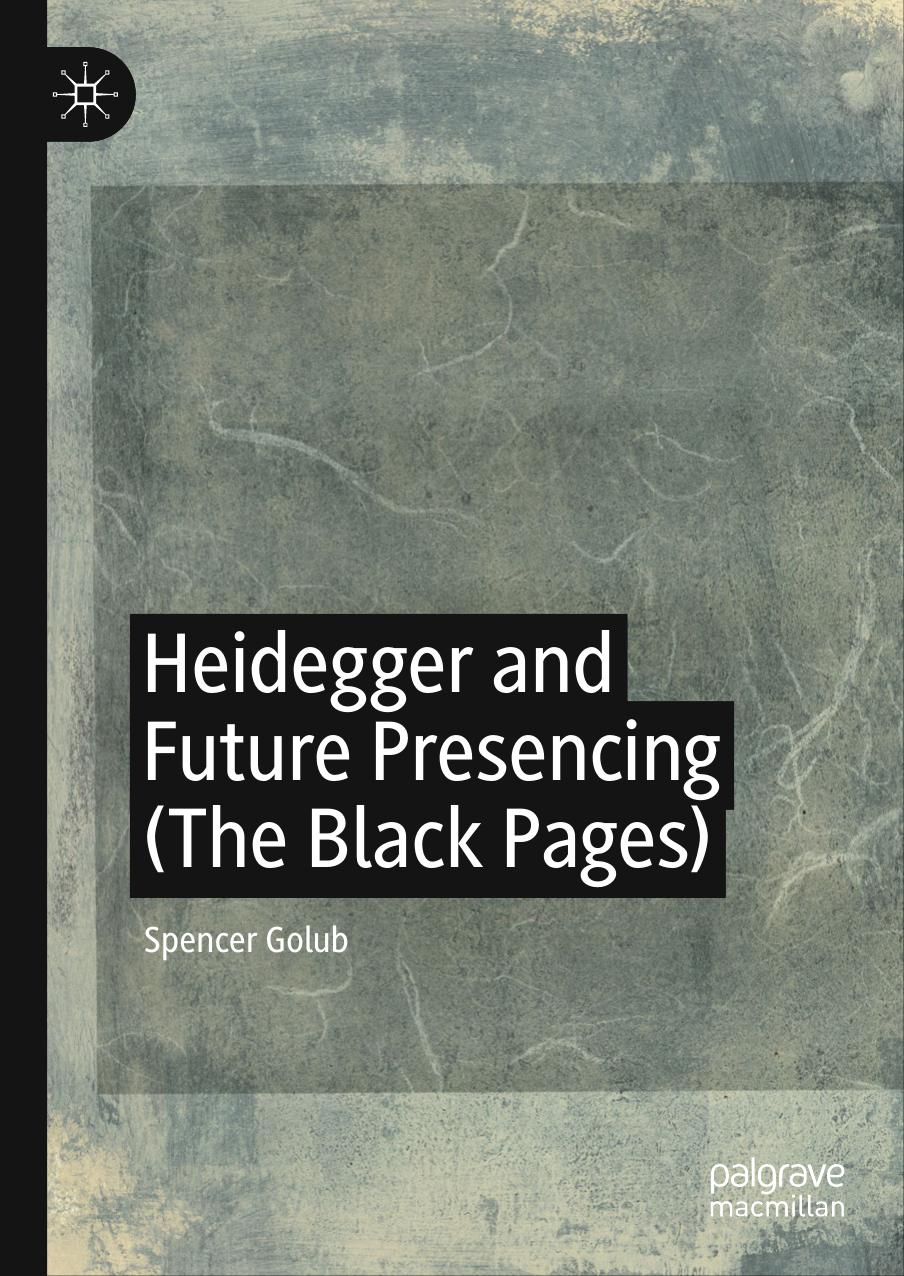
Author:Spencer Golub
Language: eng
Format: epub, pdf
ISBN: 9783030318895
Publisher: Springer International Publishing
The Chicken and the Egg
In Predestination , Jane/John each/both have a full set of both/each male and female internal organs. (âEggs are fish and fowl. This is perfectly reasonable. Tell them how to finish,â says Stein.) âWhich comes first, the chicken or the egg?â John asks Jane who answers: âThe rooster,â whose very identityâJohn-as-Jane is what Jane and John must and will discover.75 Does it matter if her story introduces the character in the first-person first as âJaneâ or as âJohn?â âWhat is the difference between a question and answer.â âThere is no question and no answer,â Stein answers her own non-question-marked question.76 In the jump-cut, temporally montaged Muriel, or The Time of Return (dir. Alain Resnais, 1963), Bernard, who lives with Hélène who is not his mother but his late fatherâs second wife (âI was already here.â), leaves the dinner table to cook himself eggs in the kitchen because, he says, he doesnât like the chicken being served. So, it appears that the answer to the question, âwhich came first, the chicken or the egg,â is âthe chicken,â unless it is âthe egg,â because what is being served comes after and with a foreknowledge of a preference for eggs. It is only Bernardâs serving notice that he will eat eggs instead of chicken that comes later. Who was lateâAlphonse who is visiting or Hélène whom is being visited? Perhaps neither one. They were just in different places (during the war when they were an item), like the chicken and the egg. Which is Hélène wearing firstâthe half-sweater or the half-coat we see her putting each of her two arms through before departing for the train station where she appears to arrive too late to meet Alphonse? (âWere we too late?â) Old but not âancientâ history, as they sayâa pattern of behavior that has neither been forgotten nor forgiven. âIs Muriel better?â Hélène later asks Bernard, whose response, âWho said she was sick?â again presents us with a first that will not last and a last that does not admit to having been first. It was Bernard who earlier told Hélène that his possible fiancée Muriel, whom we never see, is sick and then, in the next breath, not sick, no longer sick in the moment after he said it, in the not-now. Muriel, the metonym for all those in the film and in the French war in Algeria in which Bernard fought and from where Alphonse has also just returned, exists in the spectral posthumous state of being that is not so much dead as disappearedâtoward-death rather than dead as such, the former perhaps signaling a more profound actuality than the latter. Better never than late, appearing but only as a name in a sentence, although the import of this flipped coinage will be more important than what it represented. âMuriel,â Hélène remarked at her being mentioned in conversation with her not-stepson Bernard, âher nameâs not from around here.â But then, as Alphonse remarked upon departing the train station
Download
Heidegger and Future Presencing (The Black Pages) by Spencer Golub.pdf
This site does not store any files on its server. We only index and link to content provided by other sites. Please contact the content providers to delete copyright contents if any and email us, we'll remove relevant links or contents immediately.
The remains of the day by Kazuo Ishiguro(9016)
Tools of Titans by Timothy Ferriss(8418)
Giovanni's Room by James Baldwin(7363)
The Black Swan by Nassim Nicholas Taleb(7145)
Inner Engineering: A Yogi's Guide to Joy by Sadhguru(6806)
The Way of Zen by Alan W. Watts(6625)
The Power of Now: A Guide to Spiritual Enlightenment by Eckhart Tolle(5803)
Asking the Right Questions: A Guide to Critical Thinking by M. Neil Browne & Stuart M. Keeley(5789)
The Six Wives Of Henry VIII (WOMEN IN HISTORY) by Fraser Antonia(5523)
Astrophysics for People in a Hurry by Neil DeGrasse Tyson(5197)
Housekeeping by Marilynne Robinson(4462)
12 Rules for Life by Jordan B. Peterson(4316)
Ikigai by Héctor García & Francesc Miralles(4286)
Double Down (Diary of a Wimpy Kid Book 11) by Jeff Kinney(4285)
The Ethical Slut by Janet W. Hardy(4271)
Skin in the Game by Nassim Nicholas Taleb(4265)
The Art of Happiness by The Dalai Lama(4139)
Skin in the Game: Hidden Asymmetries in Daily Life by Nassim Nicholas Taleb(4021)
Walking by Henry David Thoreau(3973)
